


Summary
Anaerobic bacteria used in current probiotic compositions cannot tolerate the oxygen stress found in the gut during inflammation, reducing their effectiveness in restoring a healthy gut microbiome. Vanderbilt researchers have engineered Bacteroides thetaiotaomicron, an obligate anaerobe, to endure oxygen-rich conditions in the gut. This advancement enhances the survival and functionality of these probiotics during inflammation, leading to a healthier gut microbiome through the restoration of beneficial commensal bacteria. By preserving the integrity of the microbiota, this engineered strain provides a superior therapy for intestinal inflammatory diseases.
Addressed Need
Inflammatory bowel diseases, including ulcerative colitis and Crohn’s disease, affect over 3,100,000 people in the US and over 10,000,000 people globally. The increasing prevalence of inflammatory bowel diseases creates a pressing demand for effective treatment options to restore gut balance. Traditional probiotic bacteria often fail to perform optimally when exposed to reactive oxygen species and other oxygen stressors that are present in the inflamed gut. This technology addresses these critical challenges by offering an innovative solution that enhances the efficacy of probiotics in managing gut health during inflammatory conditions.
Key Benefits
- 1,000-fold increase in probiotic survival in inflammatory gut conditions
- Reduced manufacturing and storage costs than oxygen-sensitive probiotics and biologic drugs
- Preserves beneficial gut microbes, unlike broad-spectrum antibiotics
- Fewer side effects and lower toxicity than antibiotics
Technology Features
- Enabled by the introduction of oxygen-tolerant genes and pathways, the engineered bacteria display resistance to elevated oxygen in the inflamed gut
- Probiotics can be delivered via versatile formulation options including yogurt, gummies, liquids, and capsules
Other Details
Intellectual Property Status: Provisional patent filed.
Stage of Development: This technology has been validated in vitro and in mice. We are seeking commercial partners to advance its development for treating intestinal inflammatory diseases.
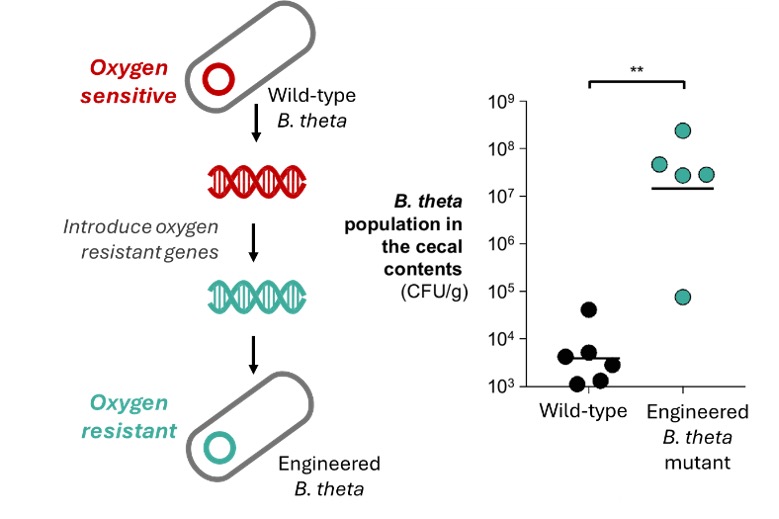
Left – Oxygen-resistant B. theta was engineered by introducing a suite of oxygen-resistant pathways. Right - In a mouse model of intestinal inflammation, engineered B. theta mutants survive better than wild-type strains.