


Summary
Vanderbilt researchers have discovered a human-derived antibody that recognizes HER2, a protein overexpressed in various cancers. These antibodies offer potential novel cancer therapeutics and diagnostic tools with improved immunological compatibility compared to humanized antibody alternatives.
Addressed Need
The HER2 protein is overexpressed in 20-30% of breast cancers and is a well-established treatment target. While HER2-targeted antibodies have proven effective cancer therapies, those currently on the market are derived from non-human sources and routinely elicit adverse immune responses. This technology directly addresses this challenge by using a novel, human-derived HER2 antibody for more tolerable applications.
Key Benefits
· Reduced adverse immune response
· Novel antibody overcomes acquired resistance and broadens therapeutic landscape
· Dual applicability for therapeutics and diagnostics
Technology Features
· Antibody is derived from human clonal B cells
· Light and heavy chain variable sequences are novel
· Functionally like trastuzumab, the gold standard for HER2 antibodies
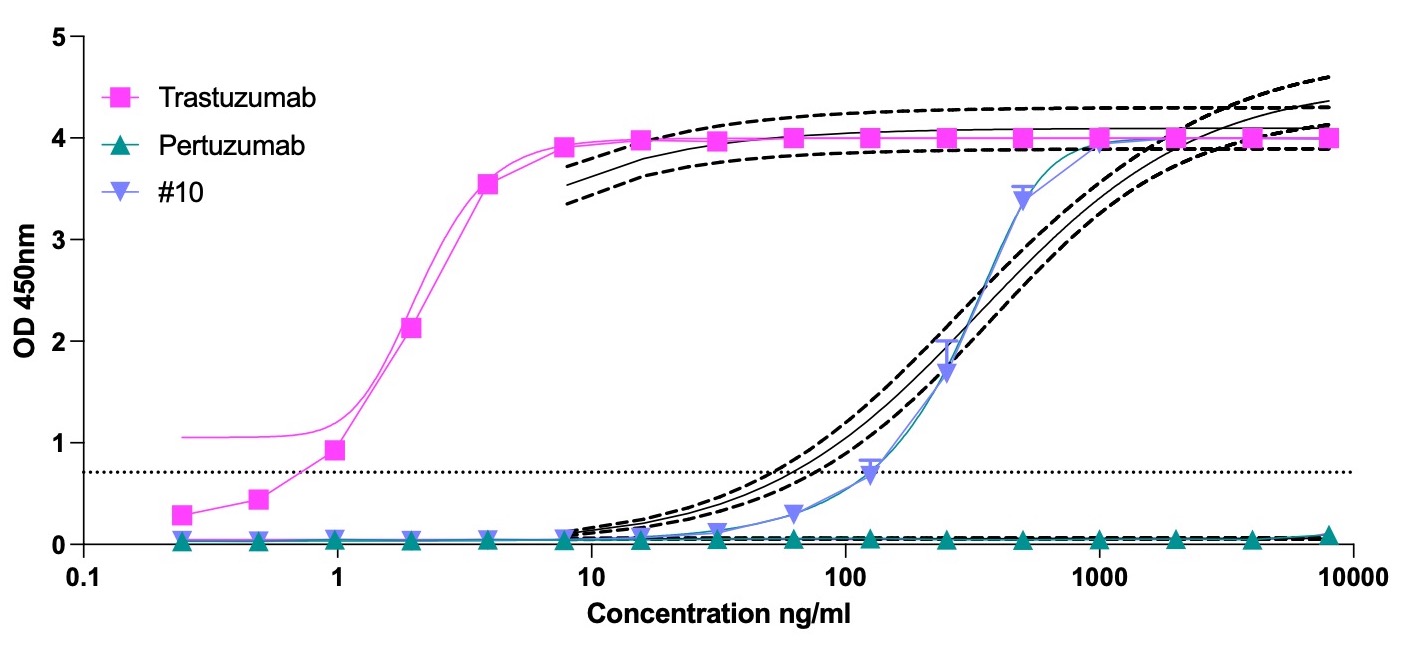
Figure: Dose-response ELISA curve showing that the binding of the novel human-derived antibody
(purple) is similar to Trastuzumab (pink).
Other Details
Intellectual Property Status: Provisional patent filed.
Stage of Development: Antibody sequenced and characterized, in vitro efficacy assays performed in breast cancer cells.